BE THE ALTERNATIVE
Diesel was born to be the alternative, the alternative to luxury, the alternative to the traditional five pocket jeans. Now the time has come to apply our anti-establishment spirit and passion for change to searching for innovative and circular solutions and products.
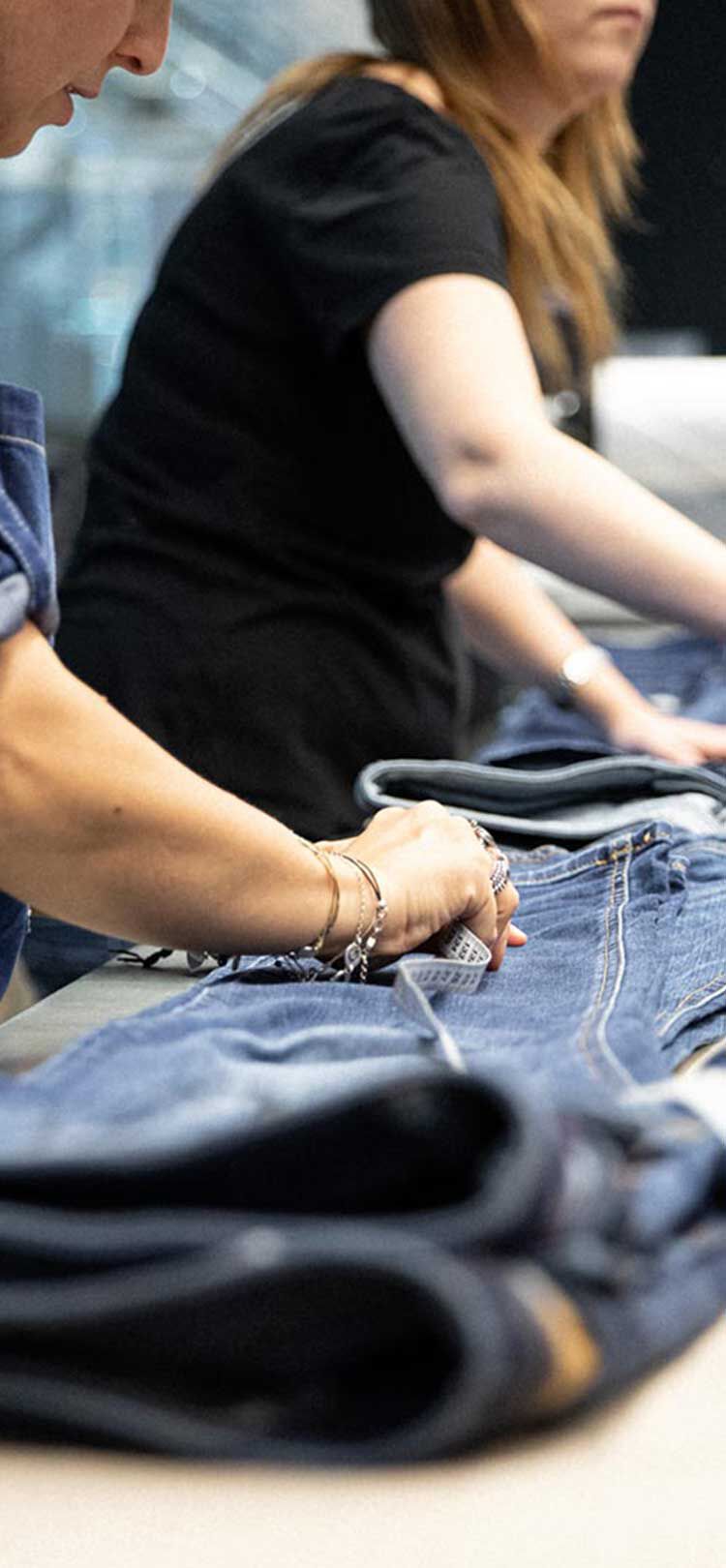

ALTERNATIVE & PREFERRED MATERIALS
Raw materials make up a significant percentage of the overall impact of our products, so the materials we use matter. We are committed to sourcing a range of preferred materials that space from certified organic to regenerative or recycled materials. To help our design, development and production teams make informed decisions about which materials to use, we have developed and implemented a PREFERRED MATERIALS MATRIX. If possible, we use certified organic, regenerative or recycled materials in our products.
Click here to find out more about our “PREFERRED MATERIALS MATRIX”
SPOTLIGHT: ORGANIC COTTON
Cotton being the most commonly used fibre in denim production, is the most widely used material in our collections, representing approximately 80% of the fibres we source. Cotton is grown on 2.4% of the world’s arable land but conventional cotton farming is responsible for approximately 16% of all agricultural insecticides used globally, more than any other single crop (ref. Pesticides Action Network). In contrast, organic farming uses natural methods of pest control such as crop rotation which supports biodiversity and improves soil health; healthy soil stores carbon and retains water. The benefits of organic farming is also the prohibition of genetically modified seeds allows farmers to retain control of seed production and the minimisation of chemical inputs benefits human as well as environmental health.
ALTERNATIVE & PREFERRED PROCESSES
Diesel is famous for distinctive denim washes and finishes, but creating the distressed effect that is our DNA comes at a cost. That is why we have been working to seek out, develop and test new denim treatments that reduce water and chemical consumption but still allow us to retain the alternative aesthetic for which we are known.
Alongside our preferred materials matrix, we have created a PREFERRED TREATMENTS MATRIX to help our design, development and production teams to better understand the impacts of the washes and finishes and to encourage them to select preferred treatments. Click here to find out more about our “PREFERRED TREATMENTS MATRIX”.

ALTERNATIVE & PREFERRED TRIMS:
Whilst Diesel is known for unique distressed denim, there are a multitude of other components and trims that go into making the perfect pair of Diesel jeans. We believe it is important and necessary to redesign these small and sometimes unseen elements as collectively they add significantly to the overall impact of a product. As with our approach to denim and other material, we look for organic or recycled alternatives for labels, patches, tapes, embroideries and other textile components. We encourage our product and design teams to use recycled metals, chrome free leather, and FSC® certified paper, card and patches.
SPOTLIGHT: ZIPPERS, BUTTONS AND THE DIESEL STRIPE
Our zippers use certified recycled polyester tape by Natulon® or certified organic cotton tape
Our buttons and rivets use alternatives to conventional galvanization
The distinctive "Diesel Industry" pocket stripe and our care labels are entirely made from certified recycled polyester
BEHIND THE DENIM DOCUMENTARY
To find out more about how we integrate these practices in our denim collections, watch our "Behind the denim" documentary.

ALTERNATIVE & PREFERRED PACKAGING
We are working to reduce our packaging and where packaging is required both for customers and for transportation we are committed to ensuring that everything card and paper based is FSC® certified. Furthermore, we have switched all our B2B plastic polybags to 100% recycled polyethylene.
CIRCULAR FASHION
WHY CIRCULAR?
A circular system is one that aims to minimize waste, one where products and materials are repaired, reused, remade and recycled. That’s why we are searching for solutions to keep our products in active use for as long as possible and finding creative ways to reuse and recycle waste across our supply chain.
Diesel x UNIDO
Denim is an environmentally impactful fabric, so here at Diesel we’re always looking for ways to integrate circularity into our seasonal collections. In partnership with UNIDO (United Nations Industrial Development Organization), we piloted and concluded a closed-loop recycling system that takes fabric cutting scraps from our Tunisian suppliers and mechanically recycle them into new yarns. These textiles are often downcycled into filling fibres or simply sent to landfill. By the end of 2024, the pilot transformed almost 24 tons of textile waste into 88,000 pairs of jeans, incorporating 20% recycled content from cutting scraps. Starting from 2025 we continued this same activity with our supplier for our regular collection, where we were able to switch for some of our carry over jeans from conventional cotton to a 20% recycled cotton. The figure below shows the number of kilograms of recycled cotton in 2025 and 2026, based on the continuation of recycling activities following the conclusion of the project with UNIDO.
RECYCLED COTTON (kg):
- 2026: 8045
- 2025: 5580
PARTNERSHIPS
A JOURNEY TO MAKE TOGETHER
The sustainability journey is not one we can embark on alone, collaboration is essential. We’re proud to have partnered with a number of organisations who are helping us reach our goals and make change happen.
Leather Working Group
At Diesel, we are committed to supporting responsible leather manufacturing across the globe and that is why we are proud members of Leather Working Group (LWG).

ZDHC Roadmap To Zero
Creating the Diesel distressed look, for which we are best known has traditionally used treatments that are intensive in water and chemical use. We are proud to be part of ZDHC ( Zero Discharge of Hazardous Chemical) initiative, which includes the MRSL (Manufacturing Restricted Substances List). The programme is focused on best practice in chemicals management to protect humans and the environment.
Forest Stewardship Council®
The Forest Stewardship Council AC (FSC®) is an international non-profit organization established in 1993, a multi-stakeholder organization that promotes responsible management of the world's forests through timber certification.

THE FASHION PACT
The Fashion Pact is a global coalition of companies in the fashion and textile industry (ready-to- wear, sport, lifestyle and luxury) including their suppliers and distributors, all committed to a common core of key environmental goals in three areas: stopping global warming, restoring biodiversity and protecting the oceans. Launched as a mission given to Kering Chairman and CEO, François-Henri Pinault by French President, Emmanuel Macron, the Fashion Pact was presented to Heads of State at the G7 Summit in Biarritz.


Are you sure you want to remove the following product from the cart?